Edoardo Monti
Brescia, Italy
We talked to the founder of artist residency Palazzo Monti in Brescia: meet Edoardo Monti.
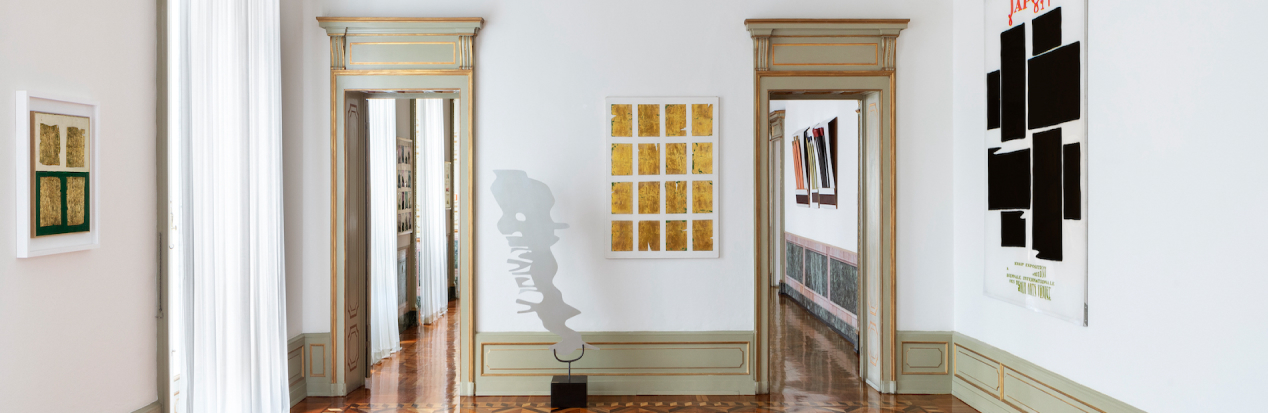
After a degree at Central Saint Martins College in London and having spent 5 years in New York working in Stella McCartney’s communication office, Edoardo Monti decided to move back to Italy and give new life to the historic family home. Palazzo Monti is now an artist residency and contemporary art collection located in the heart of Brescia.
Insider: Edoardo Monti
We know Brescia has been named capital of culture for 2023, what’s so special about it?
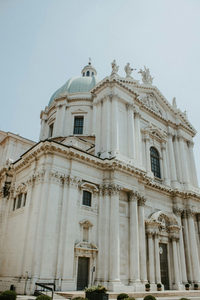
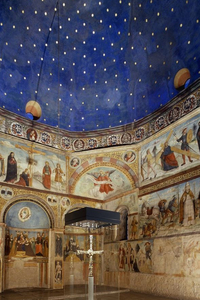
Brescia is an unusual hidden gem. It takes a little time to get to know its full potential, but when unlocked you won’t be able to get enough of it. The city is walkable, offers all kinds of services, yet there are virtually zero tourists — which is exactly what makes it so special. What really sets Brescia apart is the incredible depth of history layered into such a compact space. Few Italian cities can rival the concentration of Roman remains integrated into everyday urban life. In the heart of town you’ll find the archaeological area with the Capitolium, Roman forum, and one of the best-preserved Roman theatres in northern Italy — a UNESCO World Heritage site — sitting right next to medieval piazzas and Renaissance palaces. It feels authentic rather than staged, because locals use these spaces daily.
Then there’s the striking contrast between eras. The medieval old town climbs toward the hilltop castle (one of the largest in Italy), offering panoramic views over the city and toward the Alps, while just below you move through elegant squares like Piazza della Loggia, shaped by Venetian influence during centuries of rule by the Republic of Venice. Brescia has this rare mix of Lombard solidity and Venetian refinement.
Culturally, the city punches far above its weight. The museum complex of Santa Giulia — housed in a former monastery — is one of the most impressive in Italy, spanning prehistoric artifacts to Roman bronzes and Lombard treasures, including the famous Winged Victory statue rediscovered in recent years. The food scene is equally rooted in tradition: hearty Lombard cuisine, excellent Franciacorta sparkling wines produced just outside the city, and a strong local identity that hasn’t been diluted by mass tourism. In short, Brescia rewards curiosity. Often, it’s love at first sight - once you make it here, it becomes hard to leave.
A must-see itinerary to explore the city at its best?
From the station, head east to Fertile, an exhibition and cultural center founded in 2025 by Luca Cremona, Sole Castelbarco, and myself. There, you can visit the studio of local painter Alice Faloretti and enjoy a contemporary art exhibition inside a former glass factory building. Continue towards Piazza Vittoria, then on to Piazza della Loggia and Piazza Duomo — this triptych of squares lets you walk through centuries of history and architecture in just a few minutes.
From there, head into the vibrant Carmine neighborhood, where you can visit Bunkervik, a former underground shelter that Luca, Sole, and I have transformed into an experimental exhibition space, in partnership with Riccardo Angossini of The Address Gallery. You won’t be disappointed. Then walk along Via Musei to experience the Roman ruins of the ancient city and the Santa Giulia Museum. At the very end of the street, you’ll find us once again at Palazzo Monti, the residency and cultural project I founded, now run together with Luca and Sole, located in Piazza Tebaldo Brusato.
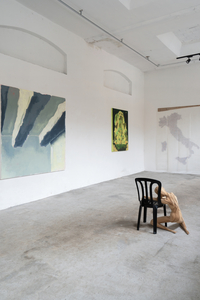
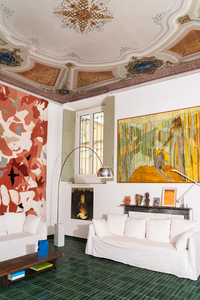
You founded Palazzo Monti, and more recently launched projects like Fertile and Bunkervik — can you tell us more about these initiatives and how they connect?
Over time, Palazzo Monti naturally evolved into a wider ecosystem. Fertile, which we launched in 2025 together with Luca Cremona and Sole Castelbarco, represents another step in that direction — both physically and conceptually. It is located inside a former industrial glass factory, a space with a strong architectural identity that we chose to preserve rather than neutralize, allowing the traces of production and labor to remain visible. The scale of the building gives us the possibility to host larger exhibitions, production residencies, artist studios, and interdisciplinary projects that would not fit within the more domestic dimension of Palazzo Monti.
If Palazzo Monti functions as a house — intimate, layered, and historically charged — Fertile operates more like a workshop or laboratory. It’s a place where experimentation, research, and collaboration can happen more openly, often involving curators, designers, artisans, and local manufacturers. One of our main ambitions with Fertile is to strengthen the connection between contemporary artistic practice and the productive fabric of the territory, creating opportunities for artists to work with materials, techniques, and knowledge that are deeply rooted in the region. At the same time, Fertile allows us to engage more directly with the local community. Its industrial nature makes it accessible and flexible, suitable for public programs, events, and educational activities that expand the audience beyond the traditional contemporary art sphere. In this sense, it complements Palazzo Monti: where the residency nurtures artists through time and immersion, Fertile provides space for production, visibility, and dialogue at a broader scale.
Bunkervik is a new and radical project within this constellation. It’s a former Second World War underground bunker that we are transforming into an experimental exhibition space, developed in dialogue with the international network of artists connected to Palazzo Monti and Fertile. The curatorial vision embraces the identity of the bunker itself — a structure originally built for protection and survival — and uses it as a framework to explore urgent contemporary themes such as ecological anxiety, extinction, post-human scenarios, material regeneration, and adaptation to systemic change.
Together, these projects form a connected platform: Palazzo Monti as a living house for artists, Fertile as a production and exhibition hub, and Bunkervik as a more experimental, research-driven space. They all share the same core idea — that culture can generate new energy for a city when artists are given the conditions to truly live, work, and take risks within it.
Your favourite art galleries or antique shops in the city?
Massimo Minini for contemporary art, Luciano Colantonio for antiques. Massimo is a friend and my mentor, I learn so much from him every time we hang out. Luciano has the most beautiful pieces in the world, each time I visit his story - a few steps from the palazzo - I fall in love with the research he does so passionately.
Best restaurants for a typical lunch and a fine dining dinner?
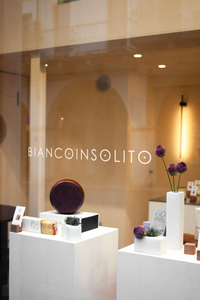
Zia Gabri!!! Definitely the best lunch spot in the whole world - it has become a weekly habit to get lunch there with the artists in residence or visitors. For dinner I recommend Trattoria Al Fontanone or Osteria Al Bianchi, historical and beautiful restaurants dense with tradition. For a more trendy place, check out Il Rivale in Città - the interiors are stunning, the cuisine Michelin star level. If you are nostalgic of the past, then La Sosta is the ultimate place to visit: fireplace, ancient grounds, waiters in tuxedos. Be sure to also note Mesceria Selvatica for its excellent selection of natural wines - and if you’re into cheese, Bianco Insolito is a must: a cool little spot that turns cheese into a full-on cultural experience, all about tasting, sharing, and discovering something new. And if you’re willing to venture just outside the city, Trattoria La Madia offers a truly spectacular dinner experience.
Any good cafes for breakfast and remote working?
I love Elisabetta in Piazza Arnaldo, our artist’s favorite spot - sitting in the sun for a morning breakfast is a luxury we can all afford. Tostato is a more nordic-inspired spot where you can easily set up for remote working. But hey, welcome to Italy: it would be easier to mark the few spots where coffee is bad ha!
Tell us the best boutique hotels or b&b for a stay.
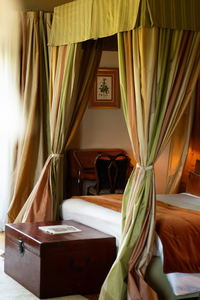
I love Hotel Vittoria’s 1920s vibe, but don’t expect the 5* service - hope more for something in line with the 3* star price you pay for. Yet the rooms are massive and it’s a throwback to a brass, marble and carved wood luxurious past. For a real luxury stay, head to Franciacorta and stay at Albereta - their spa is worth the price.
Any beautiful places for a weekend getaway nearby?
Val Camonica offers plenty of outdoors in open-air museums where you can enjoy Pre-Historical carvings and drawings - an UNESCO site. Otherwise head towards Lake Garda - you cannot miss Sirmione and its roman ruins, lemon granita and crystal clear fresh waters
Fav local hangouts for aperitif in the city?
I love Torre D’Ercole, Massenzio and Machino. But I also recommend checking out Viselli’s famous cocktail: the champagnone! One cocktail, whose recipe is still unknown (and I feel like it’s better that way), will be enough to inebriate two adults, go easy on that one!